CA Loan for Practice Growth, Tools and Working Capital Needs!
A chartered accountancy practice may require funding at different stages, from setting up an office to purchasing software, hiring employees, upgrading data security, or managing temporary cash-flow gaps. A CA Loan is designed around professional or business-related financial requirements, but its suitability depends on the purpose, cost, tenure, and expected ability of the practice to generate repayment cash flow.
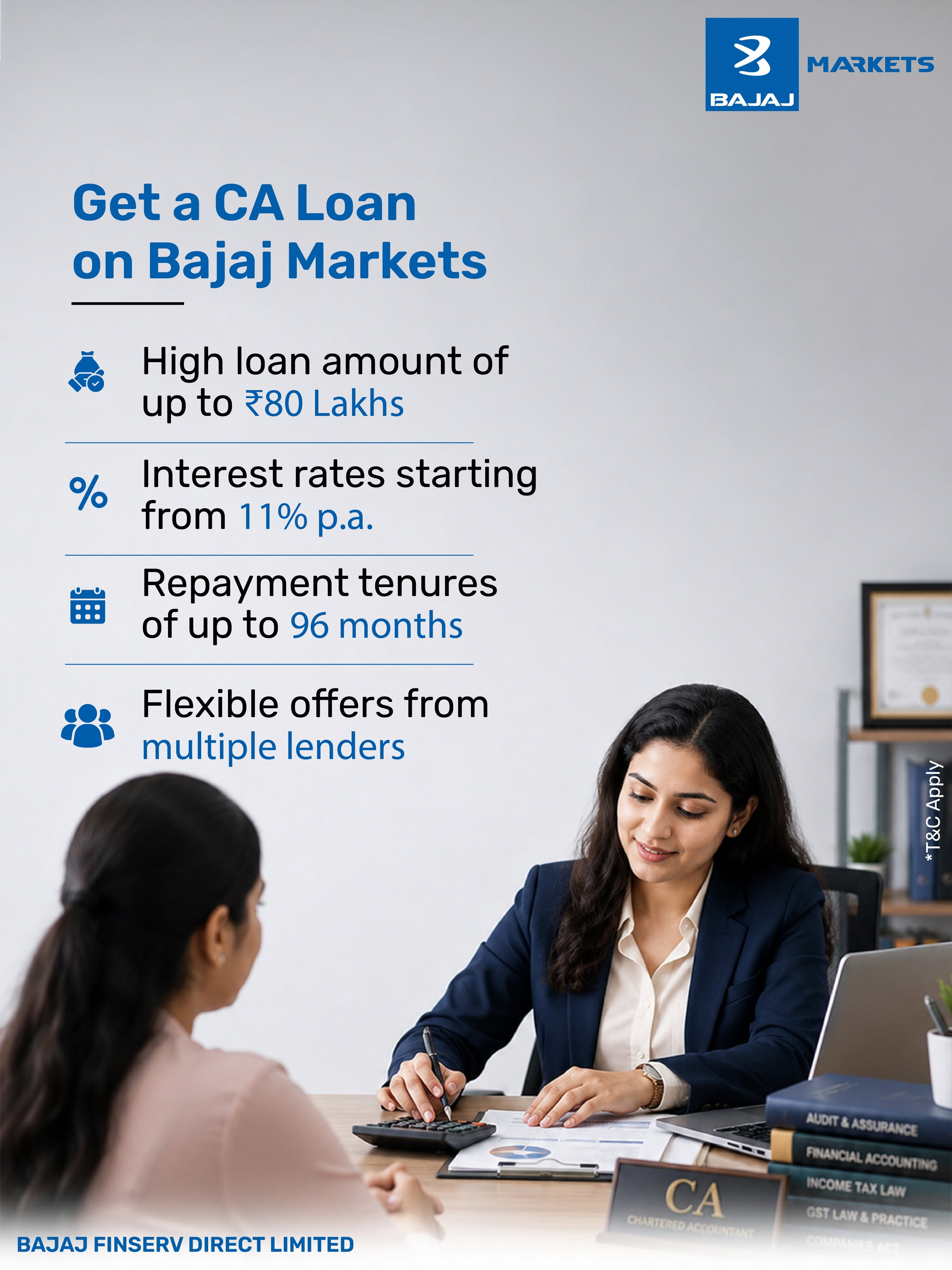
Some applicants may first encounter an offer through a loan app, but the convenience of a digital application should not replace verification of the regulated lender and the underlying terms. Applicants should review the Key Fact Statement, annual percentage rate, repayment schedule, charges, and grievance details before accepting a facility. RBI requires lenders to provide standardised key information for eligible loans and advances so borrowers can compare the overall cost more clearly.
Match the Borrowing Purpose to the Practice Requirement
Before comparing lenders, define how the money will be used. A clear purpose makes it easier to estimate the appropriate amount and repayment period.
A CA Loan may be considered for expenses such as:
- Renting or renovating an office
- Purchasing computers and secure storage systems
- Subscribing to accounting, audit, tax, and compliance software
- Hiring qualified or administrative employees
- Opening a new branch
- Funding professional training
- Managing receivables during seasonal periods
- Upgrading cybersecurity and backup systems
Long-lasting assets and temporary cash-flow needs should not automatically be financed in the same way. An office renovation may justify a longer repayment period, while a short receivables gap may require a smaller and shorter facility.
Avoid Mixing Personal and Practice Expenses
The applicant should separate household expenses from business requirements. Mixing both categories can make it difficult to determine whether the practice generates enough surplus to service the debt.
A dedicated business budget also helps track how the borrowed amount is used and whether the expenditure produces the expected operational benefit.
Build a Requirement Sheet Before Applying
A requirement sheet prevents an applicant from selecting the maximum amount offered without checking the genuine need.
It can include:
- The cost of each proposed purchase or activity
- Taxes and installation expenses
- Available internal funds
- Expected income generated or costs saved
- The period over which the expense will remain useful
- A contingency allowance
- The final amount that needs external funding
For example, if new software, computers, and security systems together cost ₹6 lakh and the practice can contribute ₹2 lakh without affecting reserves, the external requirement may be closer to ₹4 lakh rather than the full purchase value.
Use Cash Flow to Decide the Repayment Limit
Professional income can vary across months. Tax-filing seasons, audit cycles, delayed client payments, and project-based assignments may lead to uneven collections.
The repayment plan should therefore be tested against a conservative monthly cash-flow estimate.
Review:
- Average monthly collections
- Employee salaries
- Office rent and maintenance
- Software subscriptions
- Professional indemnity or other insurance costs
- Taxes and statutory payments
- Existing loan obligations
- Partner or proprietor withdrawals
- Emergency reserves
The proposed instalment should remain manageable during average or slower months, not only during the strongest billing period.
Use Collected Revenue, Not Issued Invoices
An invoice does not immediately create repayment capacity. Some clients may take several weeks or months to pay.
Repayment planning should therefore be based primarily on realistic collections rather than the total value of invoices raised.
Choose the Appropriate Type of Credit
Different financial needs may require different forms of borrowing. Applicants should ask the lender what structure is being offered and how repayment will work.
Term Loan
A term facility generally provides a defined amount with scheduled repayments over an agreed tenure. It may suit office setup, equipment purchases, or other planned investments.
Working Capital Facility
A working capital arrangement may support recurring operating expenses or temporary gaps between billing and collections. Charges may depend on the approved structure and utilisation.
Equipment Financing
Where the primary requirement involves computers, servers, office equipment, or other identifiable assets, equipment-focused funding may provide a repayment structure aligned with the purchase.
The product name alone does not establish suitability. The applicant should compare the actual interest structure, fees, security requirements, repayment frequency, and total cost.
Read the Key Fact Statement as a Decision Document
The Key Fact Statement should not be treated as a routine formality. It is intended to present legally significant loan details in a standardised and easier-to-understand format. RBI defines APR as the annual cost of credit, including interest and associated charges covered under the framework.
Review the KFS for:
- Sanctioned amount
- Amount actually disbursed
- Interest rate
- Annual percentage rate
- Instalment amount
- Number and frequency of repayments
- Processing charges
- Third-party fees
- Penal charges
- Security or guarantee requirements
- Grievance-redressal information
When comparing two offers, use the APR, net amount received, total repayment, and closure conditions together.
Calculate the Benefit Before Funding Expansion
Borrowing for growth should be linked to a measurable operating outcome.
For each proposed expense, estimate:
- Additional monthly revenue expected
- Time required to build that revenue
- Reduction in operating costs
- Improvement in turnaround time
- Increase in client capacity
- The risk that the expected benefit may be delayed
For instance, hiring two employees may enable the firm to handle more assignments, but salary costs begin immediately while new revenue may take time to develop. The repayment plan should account for that gap.
Create Three Performance Scenarios
A simple forecast can include
Expected case: Revenue grows according to the normal plan.
Conservative case: Growth is slower and collections are delayed.
Stress case: Revenue remains unchanged for several months.
The facility should remain serviceable under the conservative scenario without depending on repeated additional borrowing.
Examine Security and Personal Liability
Depending on the product and lender’s assessment, the facility may be unsecured or supported by collateral, guarantees, or other documentation.
Applicants should understand:
- Which assets, if any, secure the facility
- Whether a personal guarantee is required
- Whether partners have joint obligations
- What happens after a payment default
- Whether the lender can place a charge on specified assets
- How security will be released after closure
These terms should be reviewed before signing, particularly when professional and personal assets could be affected.
Check Digital-Lending Safeguards
When the application is completed digitally, the borrower should confirm that funds will be disbursed through an appropriate and clearly disclosed route. RBI’s digital-lending framework generally requires disbursal into the borrower’s bank account, subject to specified exceptions, and requires the APR to be disclosed upfront through the KFS.
The platform should also identify:
- The regulated lender
- The digital lending platform’s role
- Data being collected
- The reason for each permission
- Customer-support channels
- The cooling-off or exit process, where applicable
Avoid sharing passwords, payment PINs, or one-time authentication codes with callers or representatives.
Prepare Documents Before Starting the Application
Requirements vary by lender, constitution, and product, but an applicant may be asked for documents such as:
- Identity and address proof
- Professional qualification or membership evidence
- Practice registration details
- Bank statements
- Income-tax returns
- Financial statements
- Office-address documents
- Existing loan information
- Purpose-related quotations or invoices
- Partnership or entity documents, where relevant
Submitting complete and consistent records can reduce avoidable delays. However, document submission does not guarantee approval, as the lender will apply its own credit policy.
Compare Repayment Flexibility
A practice may generate surplus after a strong period and decide to repay part of the outstanding balance. Before accepting the facility, review:
- Part-payment eligibility
- Minimum part-payment amount
- Frequency limits
- Foreclosure charges
- Lock-in period
- Documentation required for closure
- Time required for a no-dues certificate
Penal charges for non-compliance must be clearly disclosed, and RBI’s framework requires them to be treated as charges rather than an additional penal component added to the contracted interest rate.
Maintain an Operating Reserve After Disbursal
Using every available rupee for expansion can leave the practice vulnerable to delays in client collections or unplanned technology and staffing expenses.
A portion of internal funds should generally remain available for:
- Salaries
- Rent
- Tax payments
- Software renewals
- Legal or compliance expenses
- Equipment repairs
- Temporary revenue disruption
The reserve should be maintained separately from the amount allocated to the funded project.
Review the Facility at Regular Intervals
After disbursal, compare the planned outcome with actual performance.
Ask:
- Was the money used for the stated purpose?
- Did revenue or capacity improve?
- Are collections arriving on schedule?
- Is the instalment affecting routine operations?
- Can surplus funds reduce the outstanding amount?
- Are all repayments reflected correctly?
Regular review helps identify problems before they turn into missed instalments.
Before the conclusion, applicants may compare the proposed borrowing cost with the implications of using an existing FD. Breaking a deposit, borrowing against it, or leaving it untouched can produce different outcomes depending on its rate, maturity conditions, premature-withdrawal rules, loan pricing, and liquidity needs. The comparison should account for the complete financial effect rather than considering only the amount immediately available.
Conclusion
A CA Loan may support practice setup, operational improvements, technology adoption, staffing, or working capital when the requirement is clearly defined and the repayment is linked to realistic cash flow.
The decision should begin with a detailed requirement sheet and end with a complete review of the APR, fees, security, repayment flexibility, and expected business benefit. Borrowing can assist professional growth, but only when the facility remains manageable during both strong and slower collection periods.